
Between 2009 and 2022 my salary went from £21,000 (~28,000 USD) to £70,000 (~94,000 USD).
That’s more than 3 times where I started a little over 13 years.
Now, depending on where you live in the world and the specific Engineering Design company you work for, this is either incredible or not so impressive (I’m betting unlikely the latter).
The reason I’m sharing this is because I want to highlight some key things I learnt that allowed me to make exponential gains in my compensation, but also in my technical and professional confidence as I progressed from Junior to Senior Design Engineer.

I found that most Engineers working in the Engineering industry settle for where they are and what they’ve been offered.
I’m living proof that your Engineering knowledge and technical skills can compound in your favour as well at the industry you’re part of.
Real information / data beats assumption
As Engineers, we think we’re super-smart.
In fact, we are when it comes to the specific “wedge” of the industry or tools we use day-to-day.
But it’s completely false when you zoom out (even a little).
Around 2013, a few years into my professional career, plastic parts I designed were made in low-volume.
When it was time to assemble it, they didn’t physically fit together.
And I had the mold guy on the phone…
“You didn’t take material shrinkage into account!”.
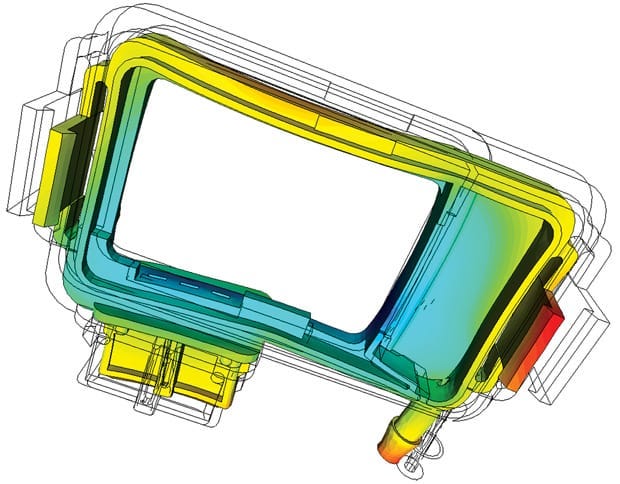
This was more than embarrassing – it was painful for me as I thought I was getting better and had started in a new role a few months prior.
Two years later something similar happened elsewhere at another company, this time with CNC-machined parts.
It wasn’t the CAD tools.
It wasn’t a poor simulation.
It was me working with data I assumed to be correct.
My framework to get it right first-time was born.
I started asking these 6 questions:
-
Who assembles this?
-
Who manufactures this?
-
Who services this?
-
Who tests it?
-
What don’t I know yet?
-
Can I contact the fabricator / machinist / molder (internal / external) to understand more about the process and get some hints?
Now I was humble in my approach, not ego-driven thinking I knew what I had to know.
Simulation is evidence, not proof
This is a big one.
I’ve used CFD to assess race car wing designs, fluid flows inside water pipes and cooling efficiency in of aluminum heat sink designs.
I’ve used FEA to assess whether CCTV brackets will withstand typical wind forces in the London Underground and whether a Taxi roof will withstand the load of a digital advertising box.
I’ve used DEM to assess how granular materials flow along chutes and tumble around in drums, analysing the wall material wear along the way.
The tools were incredible, but they were also easy to get carried away with.
I believed the results far too quickly and often took it as proof that the design is will perform detailed in my reports.
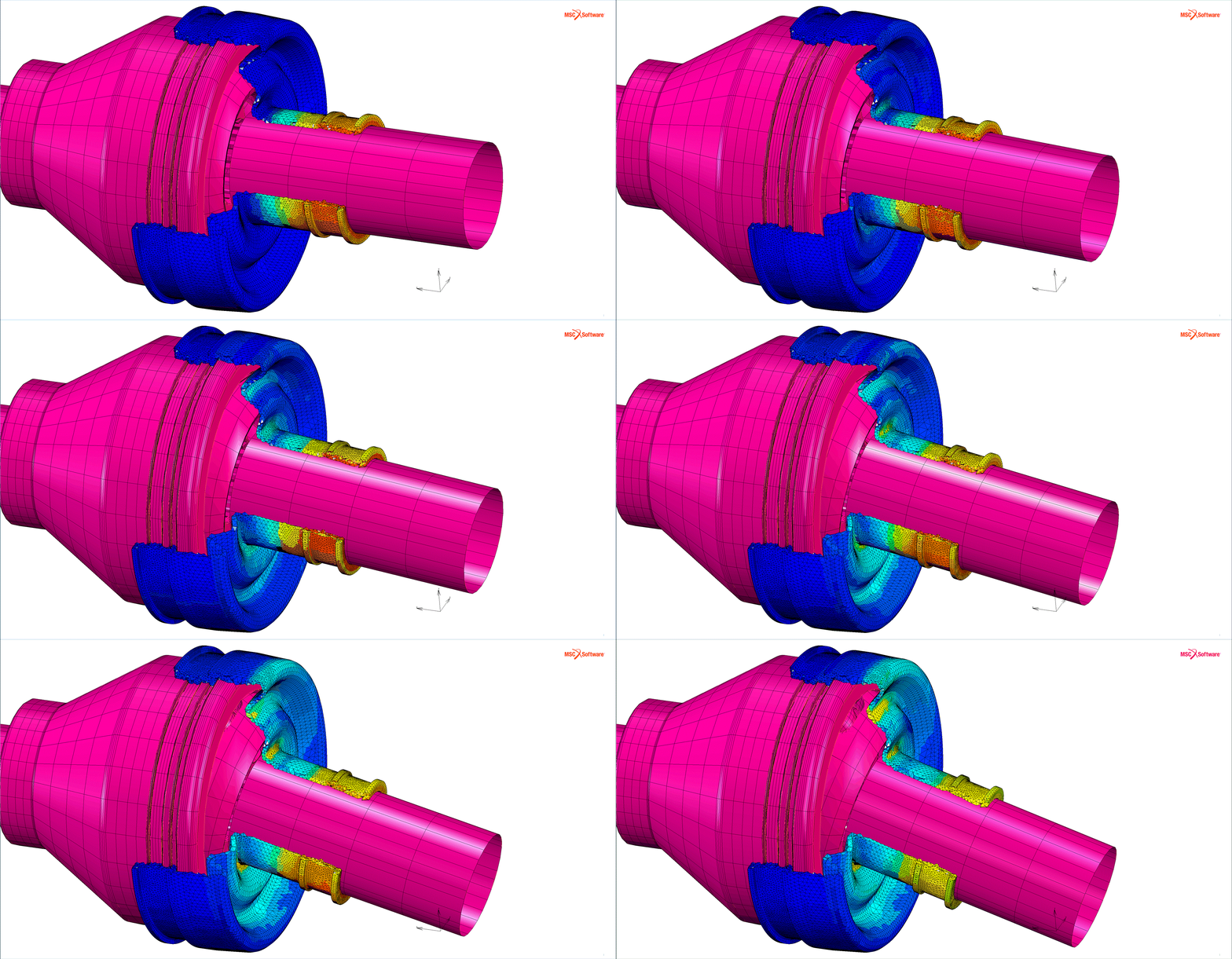
Big mistake.
The results were only indicative. In other words, it’s all theoretical and only as good as the model.
That’s not to say they aren’t useful, but it’s to highlight my approach needed to change.
Ever since I ran into issues downstream, I defaulted to the following process:
Simulation → Evidence with inherent errors → Engineering judgement → Decision(s) to inform the design
I had to reprogram my mind and default to being a problem-solver first.
That’s when these tools actually enhanced me as an Engineer.
Build workflows
I touched on this in the past in my LinkedIn posts and here in the newsletter.
Take a look at an earlier post of mine (it’s referring to OpenFOAM software, but there’s a lot of general principles and details on workflows in there):
In short, a workflow is about repeatability, confidence and delivering quality at scale.
If I found something that felt cumbersome, disjointed or simply frustrating, I’d be taking notes to document the painful steps.
I’d then take this document and simplify the process before trying to automate it with code or otherwise.
Put yourself forward. Get better at communicating.
Looking back, I wasn’t promoted because I became better at CAD, CFD or any other specific tool.
Whilst this naturally improved overtime, especially having become an independent consultant a few years in, I became more valuable as an Engineer because I became better at making engineering decisions – and voicing them.
Communication is not just about standing up in a Design Review meeting and sharing your design innovations or simulation results with the rest of the team.
It’s about building a mindset that creates a reputation around the office, with your peers.
Some tips:
-
Keep a physical journal – jot down any thoughts, design issues or questions you have as you work
-
Setup regular meetings with colleagues and managers for informal chats
-
Request feedback for any ideas once you have something to show
-
Aim to build a reputation that gets people saying “He / She is a good Engineer – always opinionated, thoughtful, considerate and generates practical ideas. Oh and he / she is incredible with the tools”.
Let your reputation carry you forward into rooms you wouldn’t have thought you had previously belonged.
This is how Engineering companies grow at large – there’s always an Engineer which is called upon / truly earns the ‘Senior’ title (and gets paid for it too).
If you understand this and put it into practice, you’ll be ahead of most Engineers.
See you soon 👋
Nasser
