
Today, if I don’t know how something behaves, I can build a 3D CAD model, run a detailed CFD simulation, write a Python script or search hundreds of research papers in minutes using the Internet.
Lately, I’ve been thinking, what did an Engineer do a few hundred years ago, like in the 1700’s?
In my research I found an English Engineer by the name of John Smeaton.
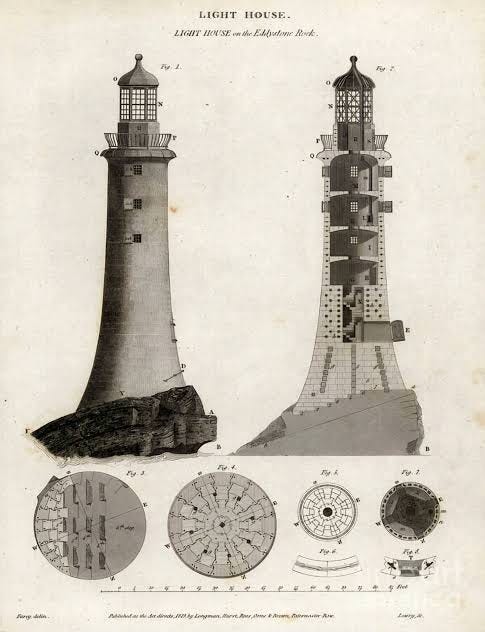
He lived between 1724 to 1792 and was focused on building in the physical, built world.
He designed water-wheels, canals and the Eddystone Lighthouse in England, UK.
But what interested me wasn’t just what he built.
It was how he worked out what to build.
In other words, his process of exploring and solving Engineering problems.
I discovered he ran experiments to help solve engineering problems by doing two things:
-
Used scale models and purpose-built rigs to vary parameters for a given problem.
-
Developed a set of empirical rules to guide best-practice.
He was getting better at solving problems by breaking them down and systematically developing more accurate ways of investigating.
And this is more relevant than ever in the age of AI.
What makes up a good Engineering approach?
I’ve thought about this throughout my 15+ year career as a Senior Mechanical Engineer and in the last years again as a Software Engineer developing Engineering tools.
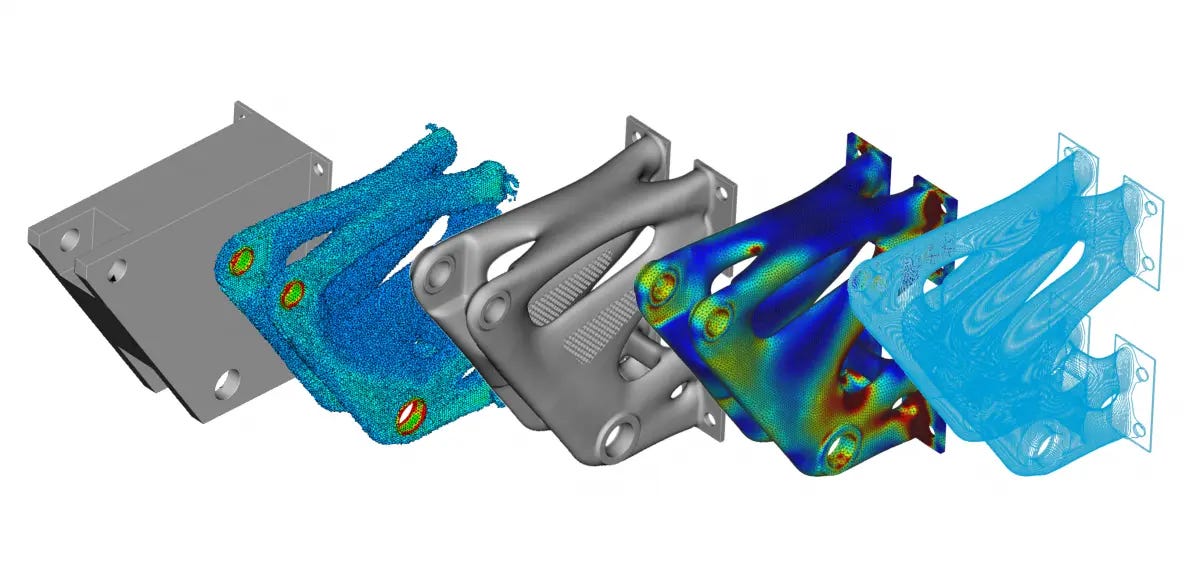
One thing I’ve seen over and over again is that the problems we’re solving are often poorly defined to begin with.
Not because of human error.
But because it’s impossible to know everything ahead of trying to solve them.
You discover things along the way.
Your assumptions turn out to be wrong.
New constraints appear.
You begin to understand the problem that much better.
The simulation raises another question.
The problem is slightly different.
But you’ve come out the other end with knowledge and experience.
That is the essence and art here…
Research and insight can reduce uncertainty before you begin.
But iteration is the practical mechanism through which you discover what you didn’t know. Now you go forward with confidence.
Nasser Mushtaq
You should never be reaching for the tools too early.
And I learnt this the hard way.
Other tool and methods exist like a set of alternative lenses through which to approach the problem…
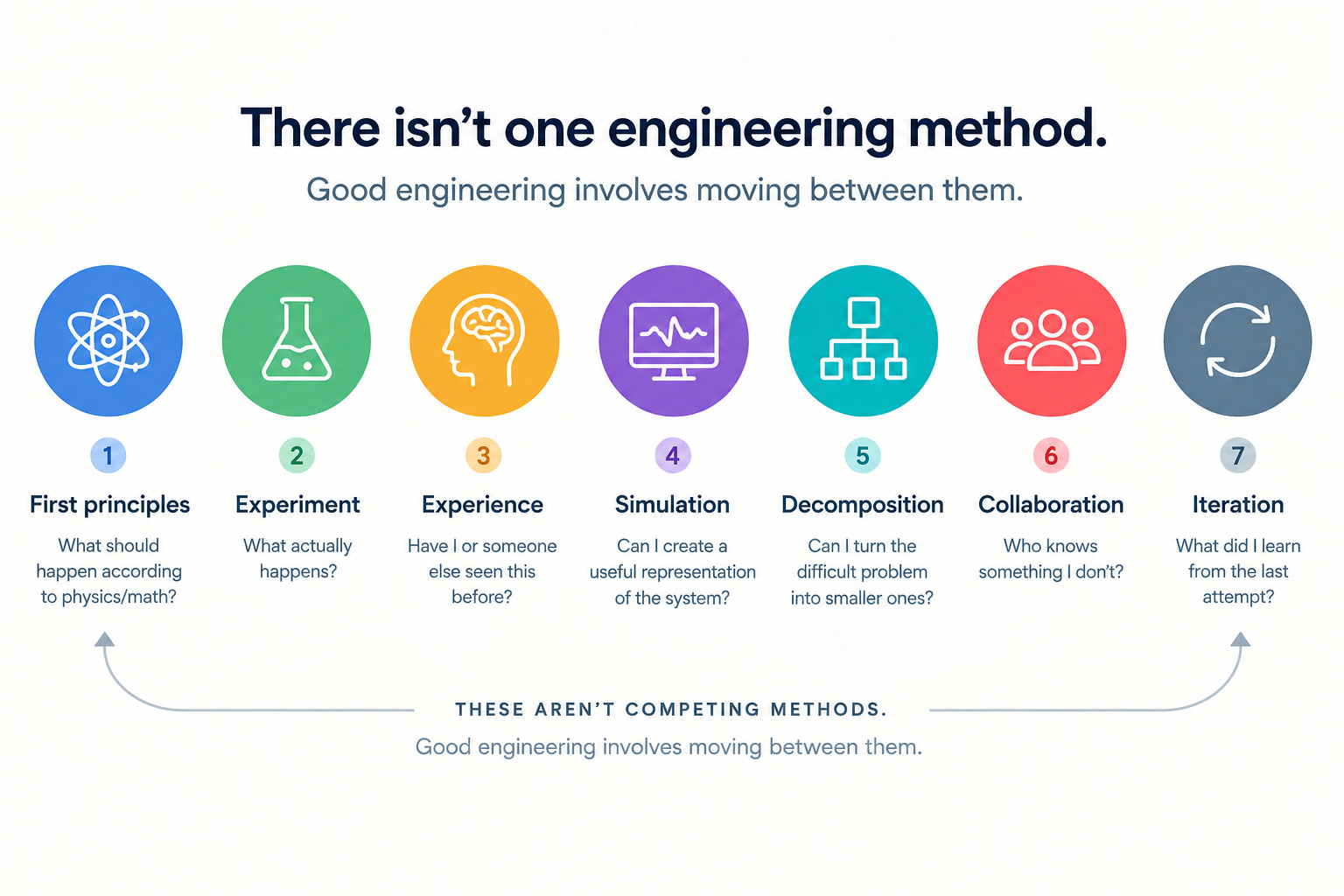
It was interesting to discover the work of a historical Engineer that made a clear impact in his field.
We now have CFD, FEA, Python, optimisation algorithms and enormous computing power available to us as modern Engineers.
But Smeaton was already doing something fundamentally similar – isolate the variables, change them deliberately, measure the response and use the experimental evidence to improve the design.
This makes me think the tools have always been augmentative for us as Engineers.
As humans looking to design and develop physical tools and products.
In summary, always lead with the Engineering question.
Let your tools be an extension of you.
Three practical questions to ask for any Engineering project:
-
What do I need to know?
-
What don’t I know right now?
-
What’s the simplest way I can find out?
Don’t forget to watch my videos and subscribe to the channel!
Have a great week!
Nasser
